
In the modern digital extremely competitive digital economy, no longer can businesses compete based on product, but rather based on relationships. Customer Relationship Management (CRM) systems have become the foundation of sales strategies in the modern world as they allow organisations to manage leads, personalise communication, and stimulate long-term growth. Nevertheless, the use of appropriate CRM is not only a technical but also a strategic choice that directly influences the sales statistics, customer satisfaction, and efficiency of the operational work.
This paper discusses the strategic considerations that companies need to look into when choosing a CRM as a way of maximising customer sales and creating relationships that are sustainable.
Fitting CRM to Business and Sales Objectives.
Aligning it to business objectives is the first and most important thing to do when selecting a CRM. Enterprise-level CRM can overload a small or medium-sized company, whereas a simple CRM can limit the expansion of an expanding company. The goal of sales should be well spelled out by the companies; this may be in generating leads, retaining customers, upselling, or better sales forecasting.
A CRM must help you with your sales funnel, beginning with awareness and continuing with conversion. The functionalities of pipeline tracking, automatic follow-up, and deal analytics are important to make the sales team keep working on the high-value opportunities instead of being occupied with administrative duties.
Ease of Use and User Adoption
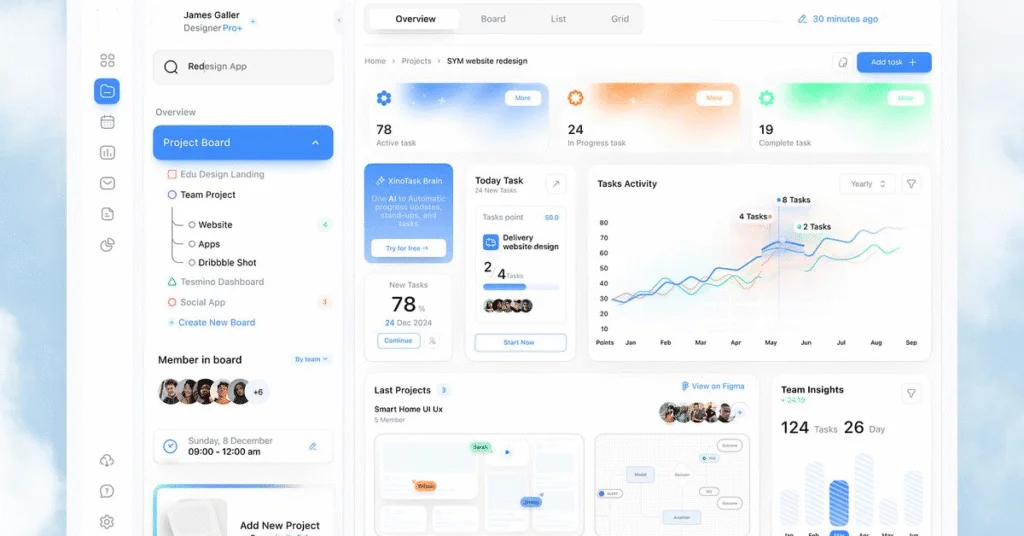
Your team will not use the most powerful CRM, and it will fail. The success of CRM depends on the ease of use. Sales staff require intuitive dashboards, easy data entry, and the ability to access the data via mobile phones to provide updated information about their customers.
Easy-to-use CRM saves time in training and increases uptake among the teams. When the sales, marketing, and customer service teams are using the same system all the time, the accuracy of data is enhanced, and the interactions between the customers and the companies are made more personalised and effective.
Customer Insights and Data Management.
A strategically selected CRM must be a source of all data about customers. This contains contacts, communication history, purchase behaviour, and patterns. The CRM platforms that are advanced provide analytics and reporting solutions that convert raw data into usable insights.
Through customer behaviour analysis, sales teams will be able to distinguish the trend of buying with the customer, anticipate their needs, and shape their sales strategy to suit future needs. These lessons would help companies shift to proactive selling, based on data, instead of a reactive one.
Automation and Workflow Efficiency.
The CRM system has one of the best benefits, that are sales automation. Automatic processes that could include lead assignment, email follow-ups, reminders, and reports would enable sales teams to work on closing deals instead of taking care of the processes.
Automation of workflow also guarantees uniformity in customer engagements. As an example, automated nurturing campaigns will be able to walk the prospects through the sales process, but still retain the personalised experience. This also increases conversion rates, besides boosting brand credibility.
Combining with the Current Digital tools.
A CRM does not work in a vacuum. It should also be able to integrate with other business applications like email applications, marketing automation applications, accounting software, and customer support applications. High integration levels eradicate the data silos and guarantee a free flow of information throughout the departments.
When sales and customer support interactions are linked to the marketing campaigns, business benefits by having a 360-degree insight into the customer through the connection of these activities using one CRM ecosystem. Such cohesiveness results in enhanced coordination, response, and satisfaction of customers.
Scalability and Long-Term Value.
The decision to choose a CRM is a long-term investment and not a short-term solution. With expansion of business, their sales processes become more complicated and demand more features and increase in data capacity. Scalable CRM enables companies to create users, tailor workflows, and get access to sophisticated analytics without changing the platform.
Value must also be considered as long-term and not on a single price. A CRM that enhances growth, productivity, and customer lifetime value provides a high return on investment in the long run.
Security and Compliance
Customers' information is a treasure, and it should not be negotiable to protect it. A good CRM must possess a good security system, such as data encryption, role access, and frequent backups. The data protection regulations also need to be adhered to, especially in the case of businesses that deal with sensitive customer information.
Customer relationships are largely fueled by trust, and a secure CRM strengthens the trust of customers by protecting personal and transactional data.
Conclusion
The choice of an appropriate CRM is a business strategy that determines the interaction between businesses and the growth of sales. With the made emphasis on aligning with business objectives, usability, data insights, automation, integration, scalability, and security, organisations should be able to select a CRM that, besides aiding sales teams, will enhance customer relationships.
A selected CRM turns the data on customers into a valuable relationship, aiding companies to sell smarter, serve better, and grow faster in a more digital market.
FAQs
1. What is the importance of CRM on sales optimisation?
CRM consolidates customer information, facilitates sales operations, and offers intelligence that assists sales teams to make deals at a higher rate and better.
2. What are the best questions to use to determine which CRM would best suit my business?
The right CRM fits your business size, sales targets, budget, and expansion strategies, as well as providing simplicity of operations and vital integrations.
3. Is a CRM useful in retaining customers?
Yes, CRMs are useful to monitor customer interactions and preferences, which will lead to individual communication that reinforces long-term relationships.
4. Can CRM automation work with small businesses?
Absolutely. Automation helps to minimize manual labor, save time, and permits small teams to work more efficiently and consistently.
5. What is the time period to realize the results of CRM?
Within a few months of adequate CRM implementation and adoption, most businesses begin experiencing an increase in efficiency of sales and interaction with customers.