
The real estate industry is a constantly changing market, and as a result, property management software is becoming a compelling revenue generator for companies. Just as CRM has transformed customer interactions, asset management software is today influencing the way real estate businesses interact with their properties, tenants, and finances—often behind the scenes.
The Rise of Intelligent Property Platforms
In recent years, property software has come a long way from being a simple record-keeping tool to a platform that is used for data-driven purposes. These systems now combine all elements of leasing, accounting, maintenance, and communication in one system. Companies can make quicker and more informed decisions by having a single location for operations. Companies can make quicker, more informed decisions because operations are centralized.
For property managers who have several units or commercial properties, the efficiency gains are particularly crucial, as it can directly affect profit.
Automation driving Operational Efficiency
Automation is one of the key factors contributing to business performance. Previously manual jobs such as rent collection, lease tracking and maintenance scheduling are now automated.
Automation minimises human error, saves time and ensures consistency. For instance, automated rent reminders, online payment platforms, and maintenance tracking software ensure timely rent payments and prompt resolution of issues, contributing to higher tenant satisfaction.
Explore the methods and tools used for data analytics and how they open up new insights.
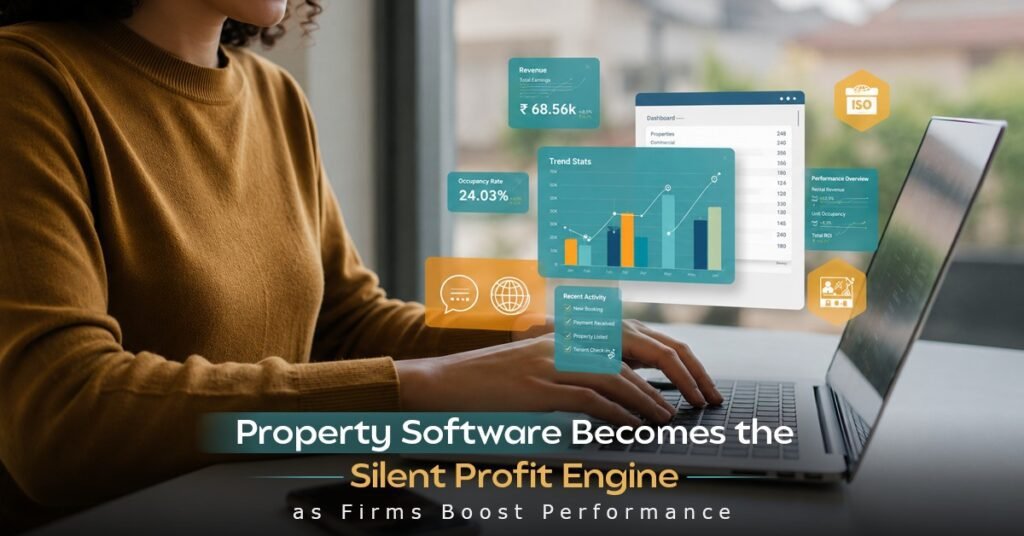
New property software solutions have sophisticated analytics features. These tools provide real-time tracking of occupancy, rental trends, and operational costs, offering businesses valuable insights into their operations.
This information can help companies pinpoint struggling properties, fine-tune pricing tactics and predict future earnings. This is a data-driven approach that makes property management more than just an administrative task.
Enhancing Tenant Experience
- The tenant expectations are vastly different in today's digital world. Renters today want to be able to communicate seamlessly, have issues resolved rapidly and enjoy convenient online services.
- Property software is the solution to these needs as it provides tenant portals, mobile applications, and instant communication. Happy tenants are more likely to stay in their homes longer, leading to lower vacancy rates and greater long-term profit.
- The ability to connect to wider business systems.The ability to be integrated into wider business systems.
- One other reason for the triumph of property software is that it connects with different enterprise instruments. From accounting systems to marketing platforms, seamless integration ensures that data flows across departments without duplication.
- This system of interconnectedness enables businesses to run more efficiently and be consistent in every part of the enterprise.
What is the solution to the problem: Quiet Transformation, Measurable Results?
While flashy in technology, the effects of property software are more subtle and yet very measurable. Organizations that use these platforms find that they have increased revenue, decreased costs, and improved operational efficiency.
This “quiet transformation” is changing the real estate industry and allowing companies to expand operations without a major increase in overhead.
Challenges and Considerations
Although there are advantages to adopting property software, it isn't without its issues. Setting up the system can be time-consuming, as well as the training of staff and data migration. Moreover, businesses need to guarantee data security and abide by local laws.
But these are the initial challenges for most organizations, and the long-term benefits are far greater.
The future of property software.
In the future, property software is likely to further evolve into more sophisticated systems, leveraging AI and predictive analytics to enhance decision-making and operational efficiency. This will allow systems to predict market trends, automate decision-making, and improve efficiency even more.
The real estate market is becoming competitive, and companies using sophisticated property software will benefit greatly.
Conclusion
The time and place of the real estate business are changing, and property software is becoming more than a business tool; it is becoming a business asset that contributes to profitability and performance. They are subtly revolutionizing the industry by streamlining operations, giving insights into specific actions, and boosting tenant experience.
When it comes to real estate businesses aiming for a competitive edge, having up-to-date real estate software is not a choice, but a requirement.
FAQs
1. What is property management software?
A digital solution for real estate management including leasing, accounting, and maintenance.
2. What are the benefits of property software in terms of the bottom line?
It streamlines tasks, saves resources, and offers data insights to guide improvements in decision-making.
3. Does it help smaller property enterprises?
Indeed, even small businesses can make use of property software for increased efficiency and scaling operations.
4. Is property software secure?
Most platforms have robust security in place, but businesses need to select trusted providers.
5. What are the predictions for the future of property software?
It will have enhanced AI-powered capabilities, predictive analytics, and greater integration with other business systems.