
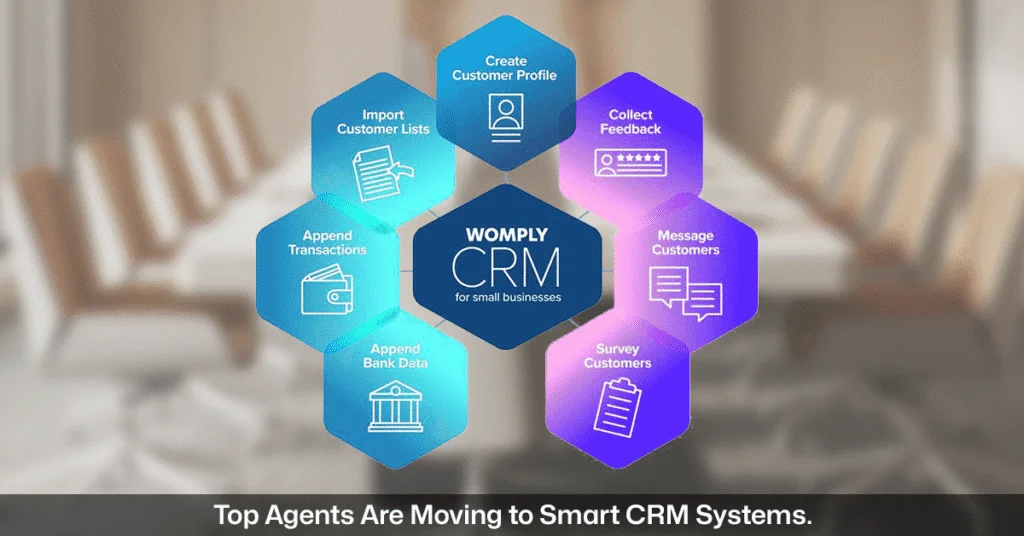
The housing business is changing at a greater pace. The demands of clients are greater, the level of competition is high, and the digital connection is nowadays obligatory. In this high-paced world, performing agents are no longer using spreadsheets, manual follow-ups, and outdated databases. They are instead moving to smart CRM (Customer Relationship Management) systems that are more advanced and streamlined to facilitate operations, close more deals, and foster better client relationships.
Why are the high-performing agents making the move? We will discuss the major causes of this increasing trend.
1. Time Saving and Productivity Automation.
Best agents realize that time is money. The classical modes of tracking, following up, and managing contacts are taking precious hours per week. Smart CRM systems are robots that are used to automate repetitive processes in email sequences, appointment reminders, lead assignment, and pipeline tracking.
Through automation, the agents will have time to do high-value work such as meeting clients, negotiating, and developing marketing strategies rather than doing administrative jobs. This productivity, in turn, has a direct effect on productivity and increased revenues.
2. Lead Management -Centralized.
Contemporary agents produce leads in a variety of sources: social media, property portals, websites, referral and paid advertisements. Without an intelligent CRM, these leads are out of control.
Smart CRM manages the incoming requests all in a single dashboard. It automatically classifies, monitors, and prioritizes leads according to behavior and interaction. This eliminates missed opportunities and offers and maintains timely follow-ups, which are important in competitive property markets.
With all the things in a single system, the agents will know the position of every prospect in the sales funnel and take the appropriate action at the appropriate time.
3. Data-Driven Decision Making
The best agents do not act on their intuition. Smart CRM systems give insight into the conversion rates, performance of the campaign, response time, and trend of sales.
In real-time analytics, important questions such as: can be answered by agents.
- What are the best marketing channels that give the best leads?
- What is the duration of conversion of a prospect?
- What follow-up strategies are the most effective?
This information will enable the agents to improve their strategies and ROI. They take informed decisions based on facts rather than assumptions, with quantifiable outcomes.
4. Improved Client Experience
The expectations of the clients have shifted. Government buyers and sellers are demanding fast services, personalized services, and professional services.
CRM systems. Advanced CRM systems also allow agents to:
- Track client preferences
- Note down past dialogues.
- Schedule timely follow-ups
Send customized property recommendations.
Clients tend to have confidence in the agent and carry on with transactions when the communication process is personalized and responsive. The high level of customer experience is a significant competitive benefit in the modern market that is focused on relationships.
5. Better Team Collaboration
Numerous best agents work in teams or agencies. There may also be miscommunication and overlapping of effort without an organized system.
CRM Smart platforms enable team members to:
- Share lead information
- Assign tasks
- Monitor progress
- Track performance metrics
Such openness provides accountability and easy cooperation. Managers will be able to control the pipelines, and the agents will be on track with similar objectives.
6. Scalability for Growth
Effective agents not only think about the present, but they also project their future. When the size of their business increases, manual systems prove to be ineffective and unsafe.
An intelligent CRM expands along with the company. The system is structured and organized, whether it handles 50 contacts or 5000 contacts. It also links with marketing applications, payment services, and customer service, forming a whole system of scaling a business.
7. Increased Consistency with Follow-Up.
Lack of follow-up is also one of the biggest causes of collapsed deals. Smart CRM will keep the lead cold, as it will automatically remind and nurture the campaigns. Drop mail, SMSs, and check-ins can remind the prospects to be interested without saturating the agent. Regular communication elevates the conversion rates and creates long-term relationships with the clients.
8. Competitiveness in an online Market.
The real estate business is becoming digital. Clients surf and compare agents online, and demand professional contact.
Agents with smart CRM systems are quicker to react, monitor interactions, and run campaigns with less difficulty. This online preparedness makes them highly competitive compared to other companies that are still using old systems. To be precise, more intelligent systems will lead to more intelligent business practices.
Conclusion
The reason why top agents are switching to smarter CRM systems is not that it is the thing to do, but it is because it is effective. Powerful drivers of growth are automation, centralized data, analytics, better customer experience, and scalability. Timing, trust, and organization are the most important issues in an industry; a smart CRM is no longer an option, it is a necessity. Embracing technology will make the agents highly efficient, improve client relationships, and lead to long-term success.
FAQs
1. What is a CRM, the smart one as opposed to a simple CRM?
Smart CRM has automation, high-order analytics, AI-driven lead tracking features, integrations, and personal communications features, whereas basic CRM primarily houses contact data.
2. What effect does a smart CRM have on the lead conversion rate?
It automates the follow-ups, measures engagement, and makes sure that no prospect is overlooked, which results in nurturing the prospect better and a higher conversion.
3. Does it require CRM software for individual agents or large agencies only?
The systems are Smart CRM that can be used by individual agents and by big teams. Numerous platforms provide large-scale solutions based on the size of the business.
4. Is CRM able to combine with marketing media?
Yeah, the majority of current CRM systems are connected with email marketing software, social networks, property portals, and advertising systems.
5. Is there any technical skill needed to change to a new CRM?
The majority of contemporary CRM solutions are easy to use and provide onboarding services, which makes the process easy even for non-technical users.