
Today's competitive real estate market demands property software, and using it is a must. However, many businesses spend money on tools that they hope will transform their business quickly, and end up with minimal return on investment. Typically, the divide is over one simple thing – lack of understanding of the maturity spectrum of property software.
As with CRM systems, property software moves on a continuum between simple digital software and smart, fully-integrated ecosystems. Understanding where your business fits into this continuum is essential in unlocking true value.
What is the Property Software Spectrum?
Property software is not a one-size-fits-all solution. It will generally pass through three main phases:
1. Basic Digital Tools
These can be as basic as a tenant register, rent tracking, or maintenance logs. They remove manual labor, but can work in isolation and need a lot of people to use.
2. Integrated Management Platforms:
The system integrates several functions such as leasing, accounting, communication, and reporting at this stage. This helps to ensure efficiency and minimises duplication of effort.
3. Intelligent & Data-Driven Systems
Advanced property software involves using automation, analytics, and in some cases AI to anticipate trends, optimize occupancy, and boost tenant satisfaction. These systems give you insights to action instead of simply collecting data.
How to see what businesses are getting wrong.
A lot of property managers put the money into sophisticated software, but then only use it as a simple tool. This unsynchronicity causes dissatisfaction and underuse. For example:
- Most automation features are unused
- The General Assembly has created a reporting requirement without analysing it.
- Data is gathered but not used in decision-making.
- The result? Premium tools are bought, and minimal gains are seen in business.
Why Understanding the Spectrum Matters
Awareness of self and sharing that on the spectrum helps to match expectations with abilities. Advancing to more complex features in your processes can be daunting if they're still manual or siloed.
Rather, the business should make slow changes:
The initial step is to digitize essential processes. The first step is to start digitising core processes.
- Implement interdepartmental integration
- Next, use advanced analytics and automation.
- With this sequential development, the transition is smoother and the outcomes better.
1. The "Gap" between software and results.
However, for organisations to reap the rewards of proper software, it is crucial to align the tech with the user. Here’s how:
2. Align Software with Business Goals
Never use available features that are not needed. Make sure to highlight tools that will help you achieve your goals, such as lowering vacancy rates or improving tenant retention rates.
3. Invest in Training
Even the greatest software can't survive without proper user adoption. Teams need to know not only how to use the system, but why it is important.
4. Use Data Strategically
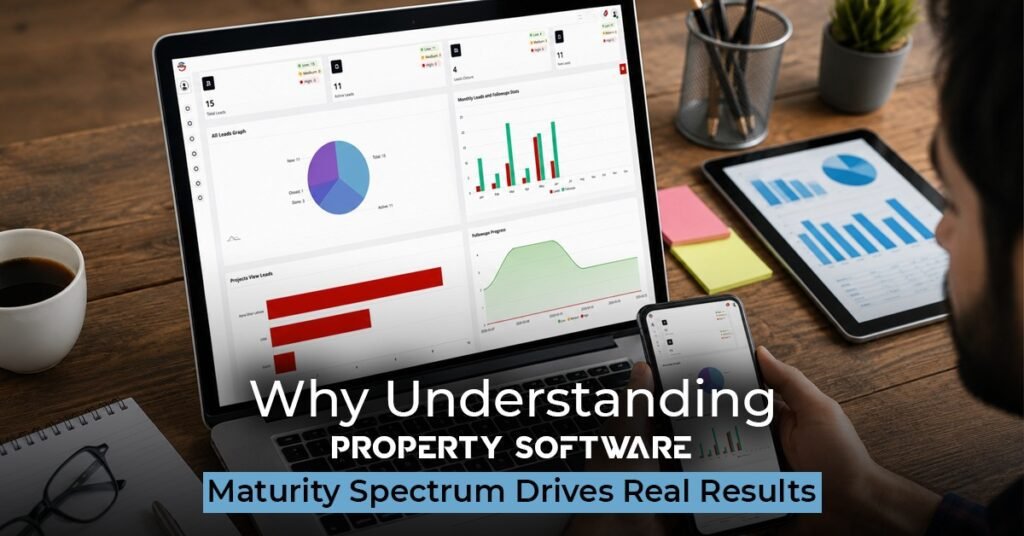
Modern Property Software Provides Useful Information. Leverage dashboards and analytics for pricing, maintenance planning, and investment decisions.
- Automate where it adds value, following the rule of "4 As".
- Automation should decrease repetitive jobs, not add complexity. Do things in stages: automate rent reminders or maintenance requests, then scale up.
5. Continuously Evaluate Performance
Your processes must adapt to the changes in technology. Review software needs and opportunities regularly and improve software as needed.
The Role of Future-Ready Property Software
Property management is not just about managing; it's about optimising; the future of property management is intelligent systems. Predictive maintenance, tenant behaviour analysis, and automated financial forecasting are becoming more crucial features.
But these benefits can only be realized if the software is fully understood and maximized by businesses. This knowledge is essential; otherwise, the most sophisticated system is a tool that is only used half as much.
Final Thoughts
Property software can revolutionize operations, boost efficiency, and create growth. In reality, however, they do not get real results from the software alone, but from the understanding and application of it.
Knowing the property software maturity continuum and positioning your strategy to meet it will help to bridge the chasm between investment and impact. Rather than looking for features, create a system that grows with your business and can be measured over the long haul.
FAQs
1. The evolution of a software product from being undeveloped to fully mature.
It's about the phases of software use and ascendance, ranging from basic digital tools to integrated, smart property administration frameworks.
2. Why aren't businesses getting results from property software?
This frequently occurs because of poor software use, insufficient training, and incongruity between software capabilities and business requirements.
3. How to enhance property software adoption?
Properly train, match features to objectives, and add new advanced features slowly.
4. What advantages does advanced property software have?
Efficiency, effective decision-making, task automation, and improved tenant experience.
5. Is it worth it for small businesses to invest in advanced property software?
Yes, but they need to be taking steps to do this gradually to make it work and use it properly.